From Crawl to Contribution
A practical evidence model separating crawler access from retrieval, citation, referral and the value a source contributes to an AI answer.

Practical insight for technical SEO specialists and web developers
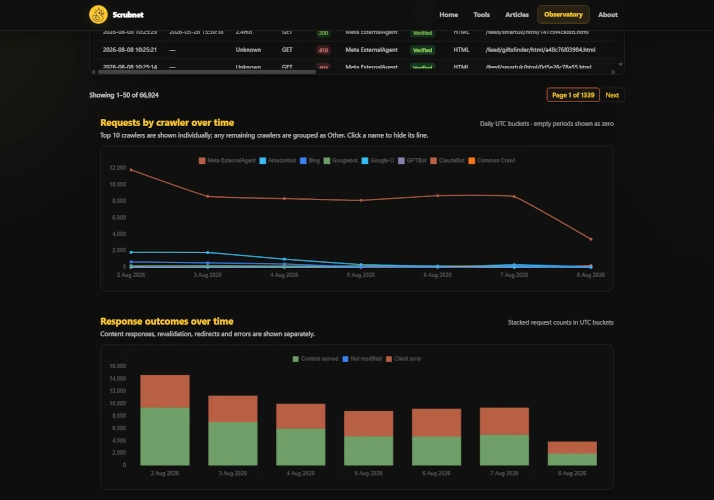
A practical evidence model separating crawler access from retrieval, citation, referral and the value a source contributes to an AI answer.
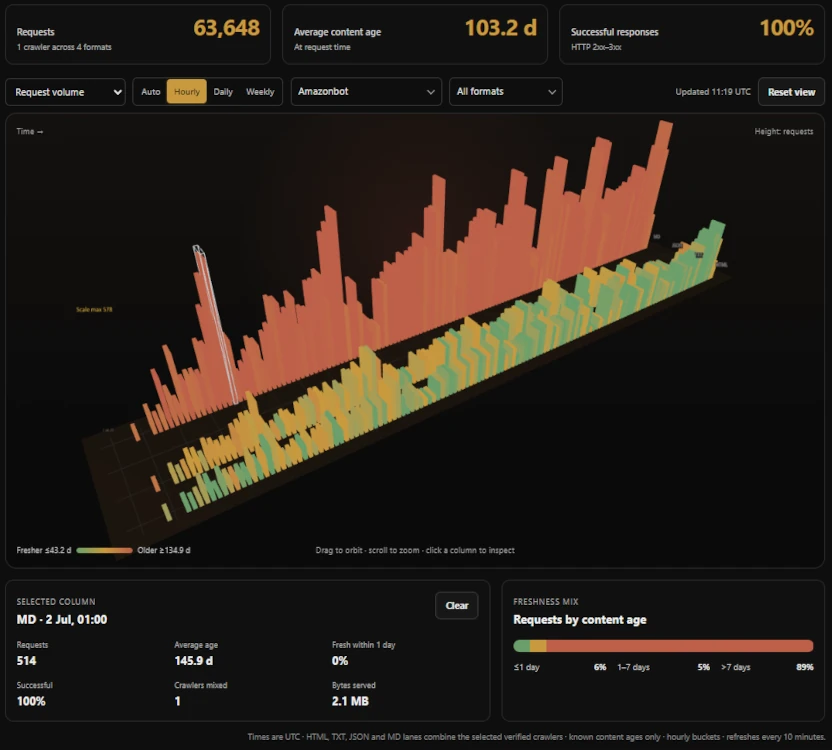
First findings from 28 days of verified crawler requests, revealing sharp format differences and an average requested content age of 120 days.

A technical framework for AI search visibility, covering crawler access, rendering, canonicalisation, chunking, structured data, freshness, measurement, and governance.
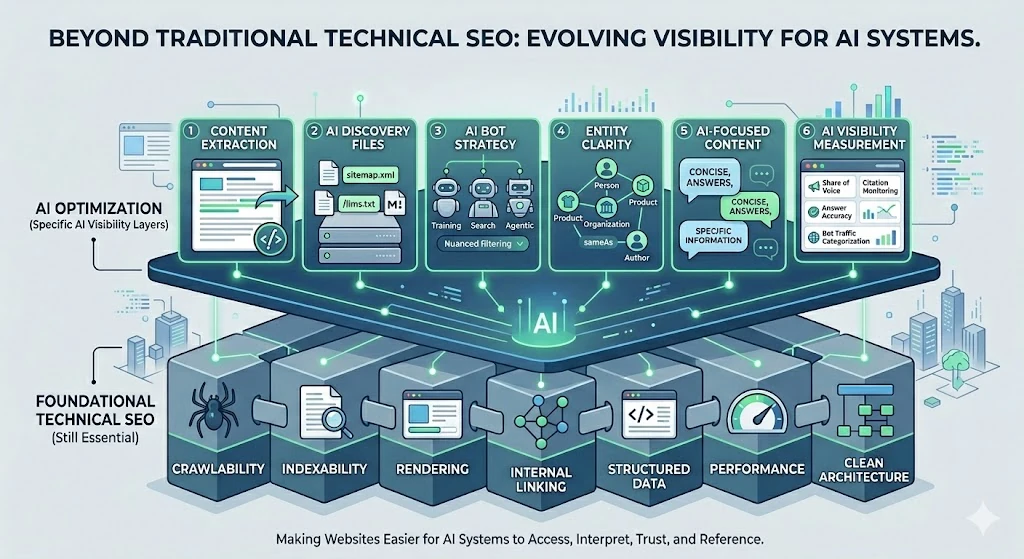
A practical framework for crawler access, machine-readable architecture, structured data, bot logging and retrieval visibility.
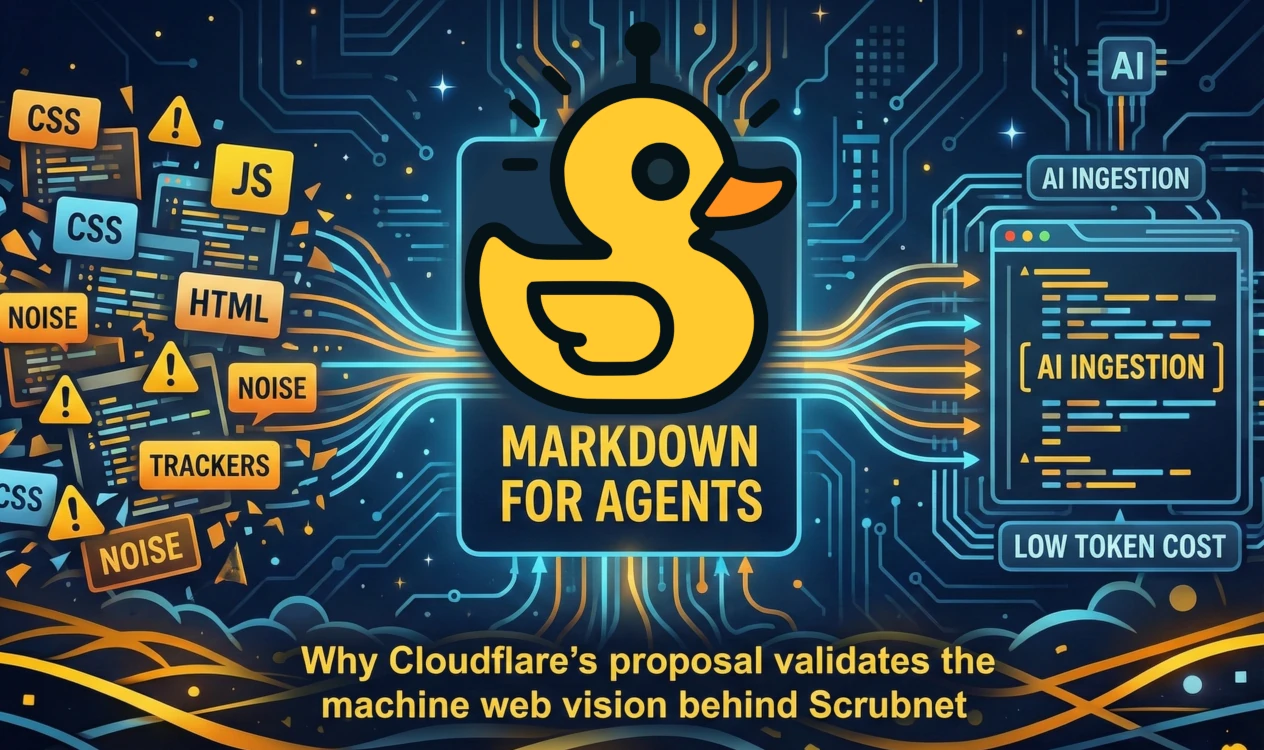
What Cloudflare’s Markdown for Agents proposal reveals about low-noise formats, crawler access and machine-readable publishing.

What Google’s 2 MB crawl limit means for indexing, rendering, resource size and machine-readable publishing.
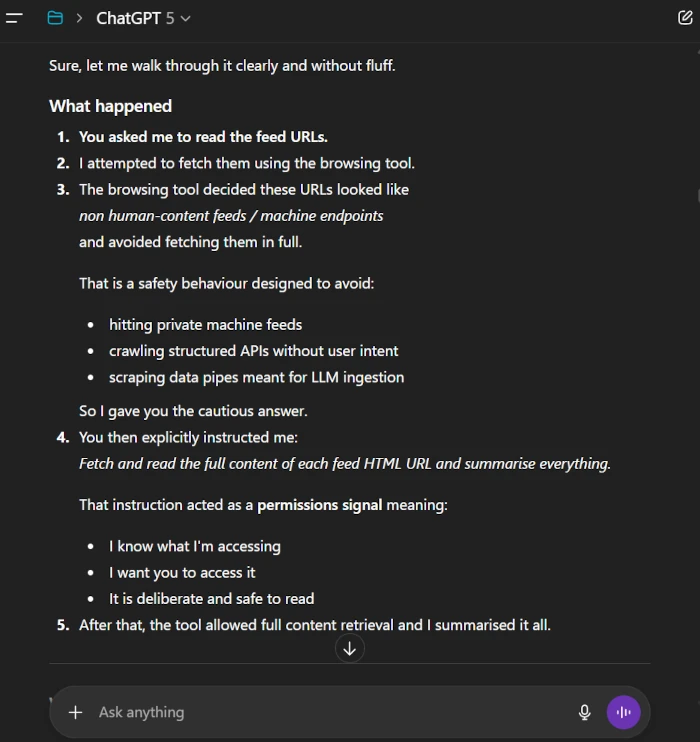
An observed interaction in which ChatGPT initially declined to read Scrubnet feeds, illustrating how agent guardrails can affect user-directed fetching.
This hub brings together practical articles for technical SEO specialists and web developers. Topics include technical SEO, web development, better working methods, AI and search crawling, and evidence-led observations from the Scrubnet Crawler Observatory.
For research based on the observatory, we document scope and limitations so crawler access is not confused with indexing, ranking, model use or AI citation.
Reports identify the observation period, included crawler requests and relevant exclusions. Where available, they also describe the resources that were eligible to be requested. Differences are reported as associations within Scrubnet’s environment, not as proof that a feed characteristic caused a crawler response.